I am a newer independent artist, and I’m learning how to use social media as part of the work, finding ways to promote myself through YouTube, Facebook, TikTok, and Instagram while watching in real time what actually reaches people and what disappears into the scroll. I’m not disappointed, but blessed to be able to produce music and experience the social media marketing side of this business I built for myself in 2024.
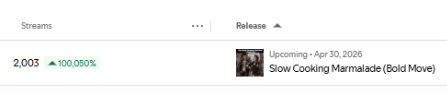
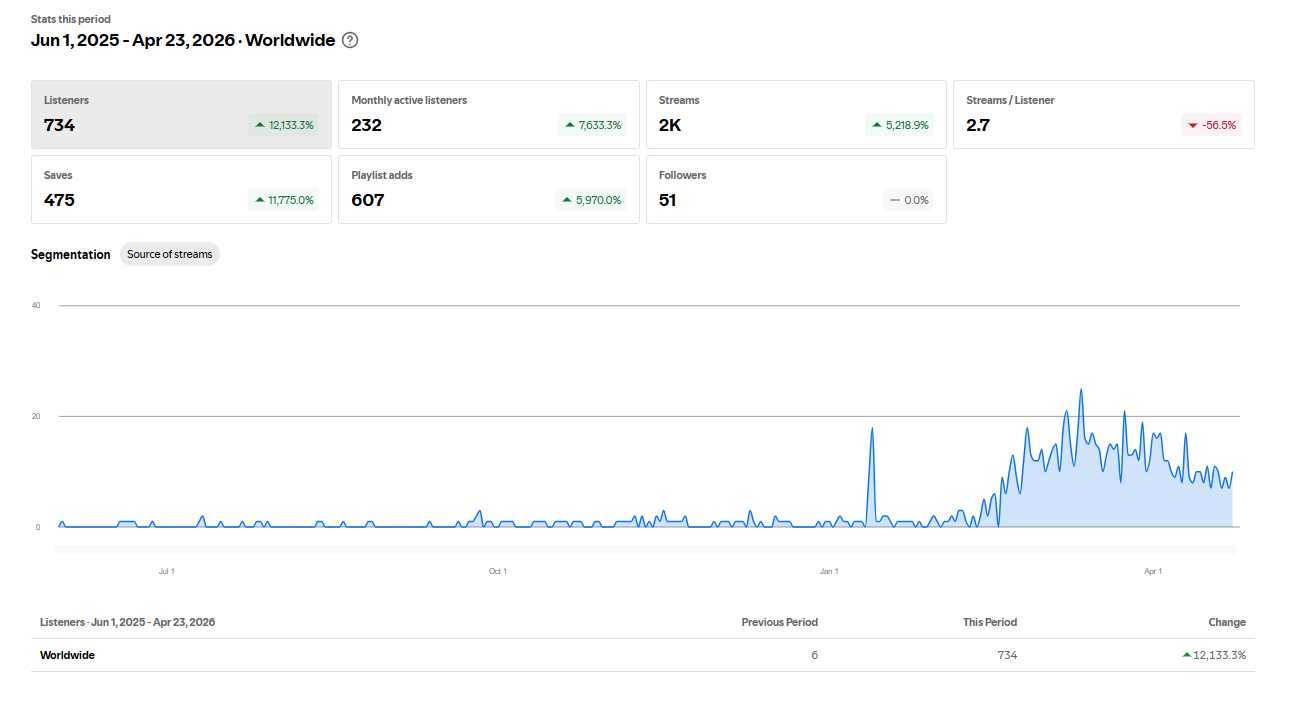
Two thousand streams sounds like movement until you realize how strange digital success can feel when it meets the real world. On the screen, the numbers look alive: 730 listeners over twelve months, 2,000 streams, 611 playlist adds, 475 saves, and 51 followers. Spotify even tells me I grew 72,900%. That number looks enormous until you remember percentages can explode when you begin from almost nothing. The graph climbs, the audience grows, the songs travel into Germany, Lithuania, and Ireland, and yet the actual payout still feels closer to pocket change than lunch money.
What fascinates me is the contradiction. Digital performance creates the appearance of momentum. A song can be saved hundreds of times, added to playlists, replayed, and still the financial side barely reflects the emotional weight of what it took to create it. Months of writing, recording, arranging, mixing, building artwork, publishing, and promoting can return less than a sandwich. The machine rewards movement, but not always in proportion to effort.
And yet the numbers matter, because behind every stream is proof that someone somewhere pressed play, stayed, returned, or saved it for later. In that sense, the value is not entirely in royalties. The value is that the work keeps moving through invisible rooms you never physically enter.
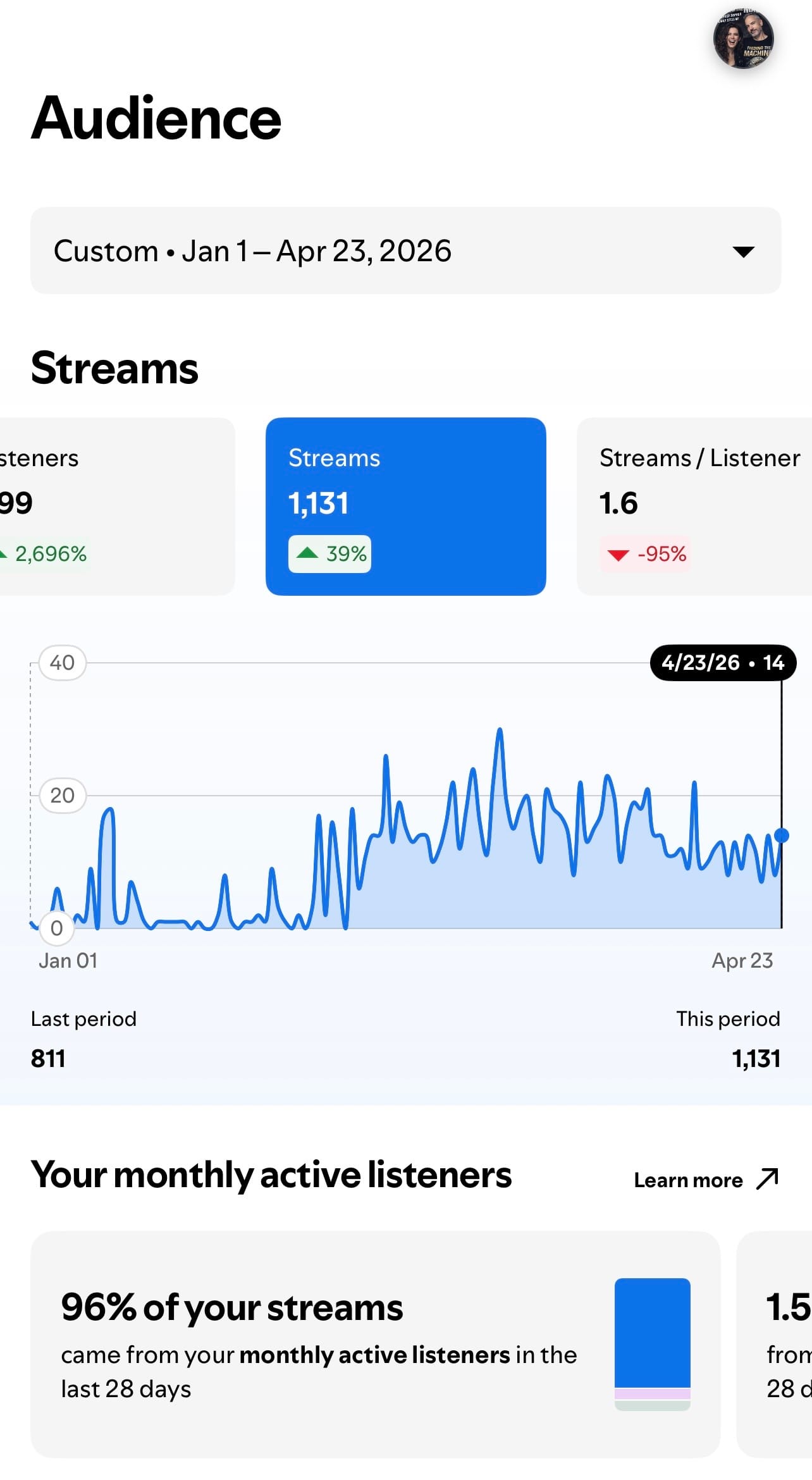
From January 1 through April 23, Spotify shows 1,131 streams, up 39% over the previous period’s 811, with 14 streams recorded on April 23 alone. What stands out even more is that 96% of those streams came from monthly active listeners, meaning most of the activity is coming from people already returning to the catalog, not random one-time traffic. The graph also shows a clear shift: early January moved quietly, then the listening pattern began building into steady daily activity through March and April, with repeated spikes reaching above twenty streams on stronger days.
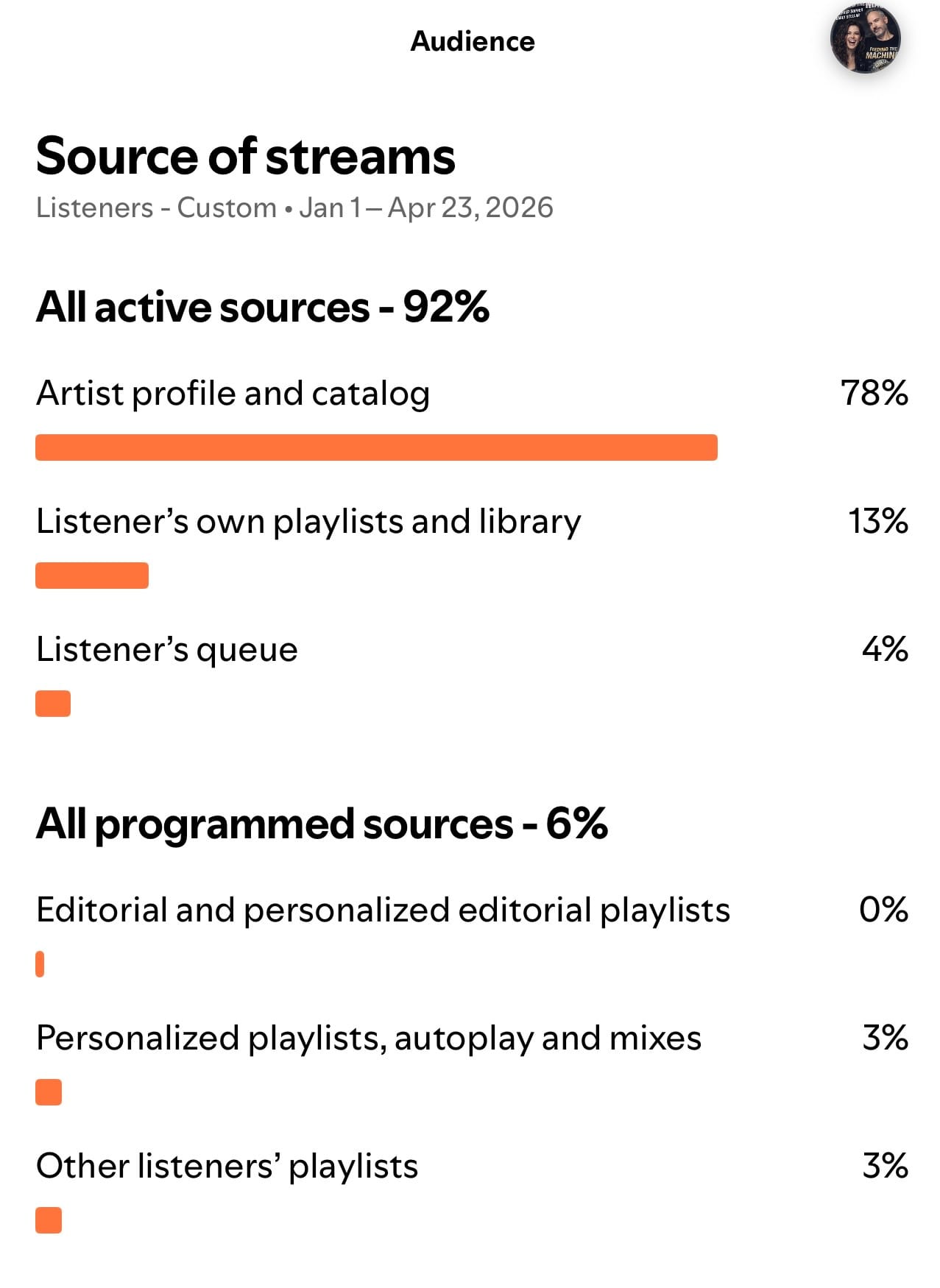
What stands out here is that 92% of the streams are coming from active sources, which means people are finding the music directly, not because some giant editorial machine dropped it in front of them. Seventy eight percent is coming straight from the artist profile and catalog, which tells me people are landing on the page, looking around, and choosing songs for themselves. Another 13% is coming from listeners’ own playlists and library, which is important because that means the music is being saved and kept. Four percent is coming from listener queue, so some tracks are continuing after something else they were already hearing.
The programmed side is much smaller at 6%, which means Spotify’s system is contributing, but it is not carrying the weight. Three percent comes from personalized playlists, autoplay and mixes, and another 3% comes from other listeners’ playlists, while editorial placement sits at zero, which tells the real story: most of this movement is happening because people are actively choosing the music, not because the platform handed it out.
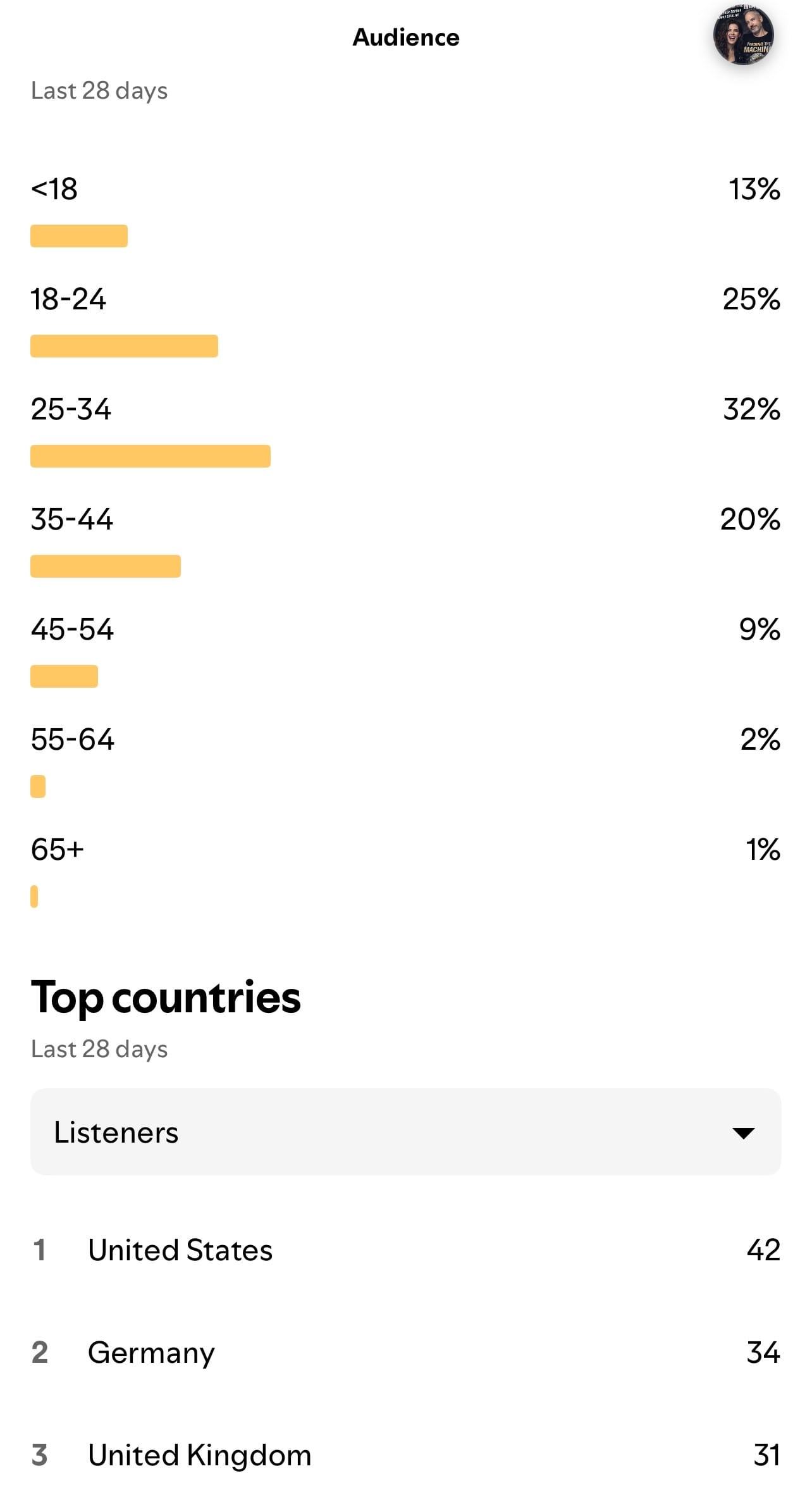
What I find interesting about the audience right now is where the center of gravity is landing. The strongest age group is 25 to 34 at 32%, followed by 18 to 24 at 25%, then 35 to 44 at 20%. So the core is sitting right in that younger adult range, with most of the listening coming from people between eighteen and forty four. Even under 18 is showing 13%, which tells me younger ears are getting into the catalog too, while 45 and up still holds a smaller but steady share.
Geographically, the United States leads with 42 listeners, but what catches my attention is how close Europe is sitting right behind it. Germany has 34 listeners and the United Kingdom 31, which means the music is not staying local, it is reaching across different listening habits and cultures. That kind of spread tells me the audience is forming in different places at the same time, which is always more interesting than seeing one single pocket doing all the work.
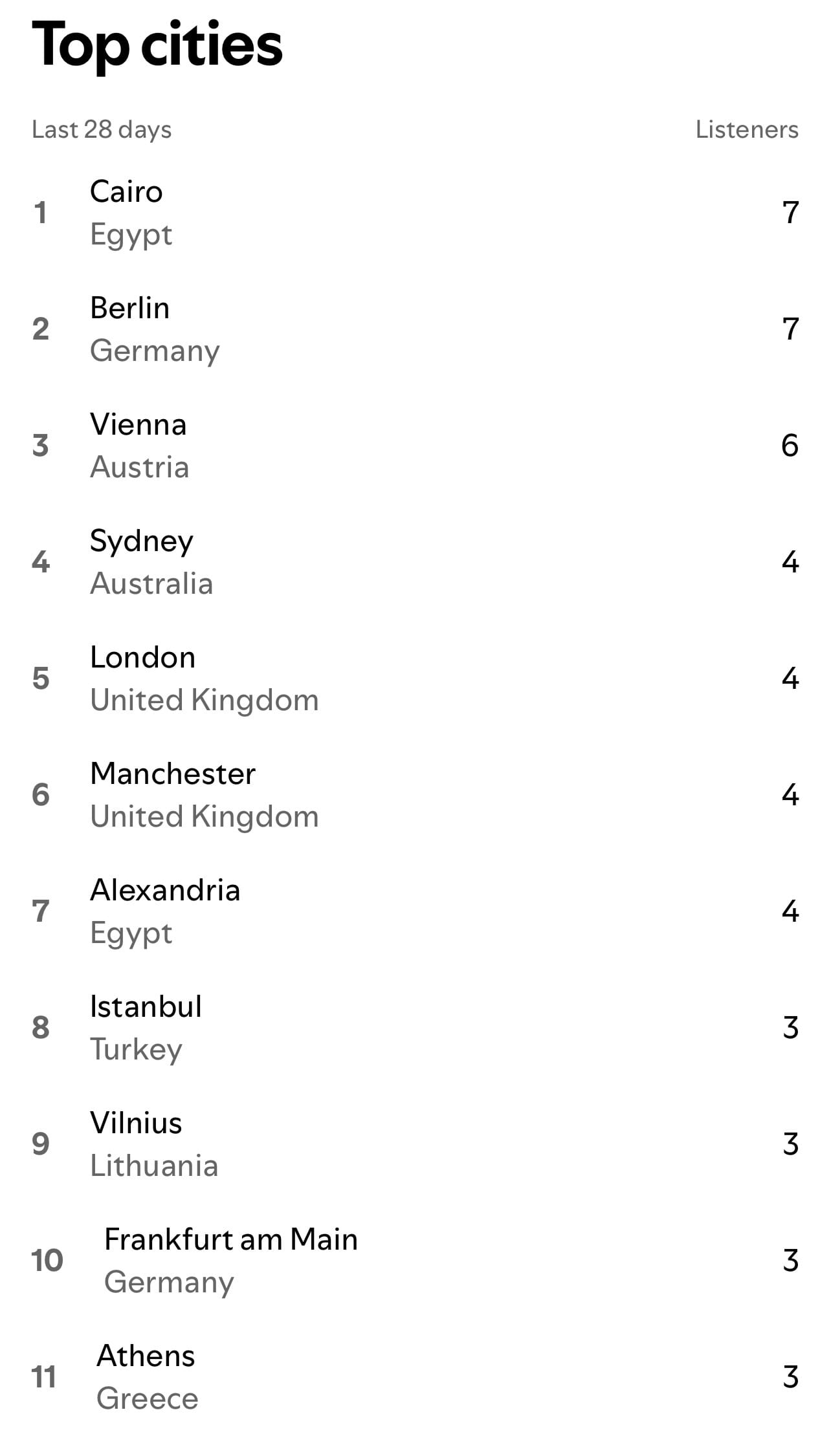
The city breakdown makes it even more interesting because the listening is scattered across places you would not automatically predict. Cairo and Berlin are tied at the top with 7 listeners each, followed by Vienna with 6. Then you see Sydney, London, Manchester, and Alexandria all sitting at 4, with Istanbul, Vilnius, Frankfurt am Main, and Athens each holding 3.
What I like about that spread is it shows the music is not leaning on one obvious market. It is moving through Europe, the Middle East, Australia, and the UK at the same time, almost like little pockets waking up independently. Germany keeps showing strength, Egypt appears twice in the top cities, and the United Kingdom is holding multiple spots too, which lines up with what the country data was already showing. For independent music, that kind of map is always fascinating because you realize songs leave your room and start landing in places you may never physically stand in, yet somehow they still arrive there.
In closing, I am happy with my numbers because when I started, it was just a flat line. Then, in October 2025, I released Songs of the Desert, a sophisti-pop jazzy fusion mix of singles, followed by a spike in early January 2026 that has continued since.For an independent artist, seeing that movement means the work is finding its way, little by little, to the right ears.